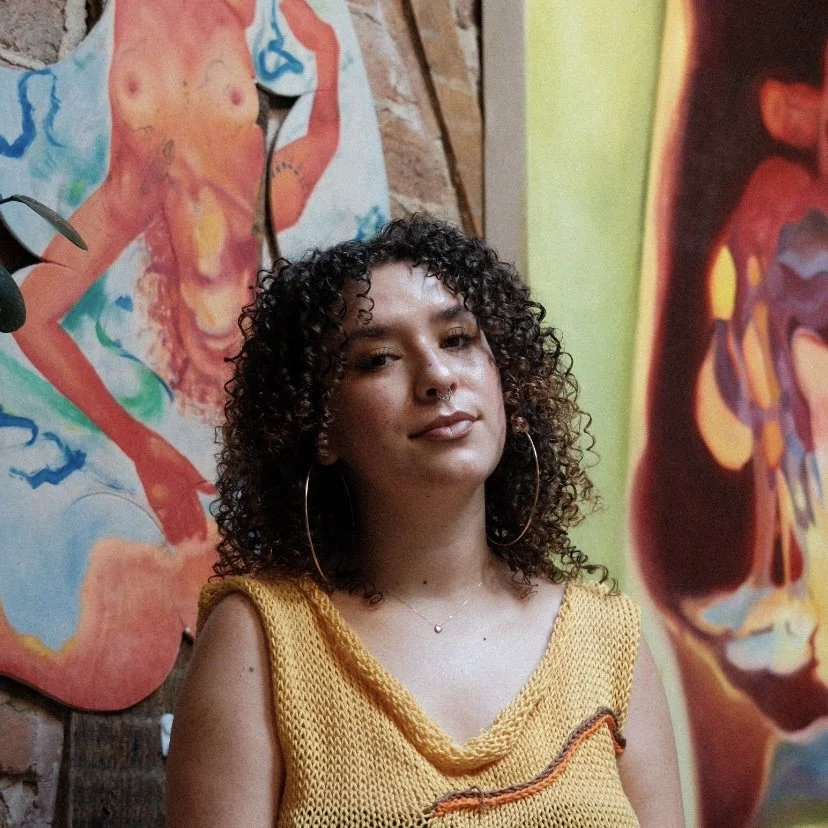
Natasha Fortson
INTERVIEW
ISSUE I
2025Natasha Fortson
Multidisciplinary artist and curator
Issue I, 2025
Burntout (BT): What feelings do you get when you need to create? Somatically and physically, specifically. Do you feel a pull or urge somewhere in the body?
Natasha (NF): What motivates me to create is my love for life, nature, earth, textures, smells, the music of the world, the colors, and the way things grow, expand, and die. The way things move and dance, the way people do, my people, the people I love so deeply and so widely. I create because I have to. There's no other option. I'm here to create and to breathe in and to express it.
I feel it deeply in my body and my soul. It's internal, external, instinctual, and divine. What motivates me to create is everything that's external and internal, the meeting of each other. Also, my grandma's a painter and my grandparents on both sides are very creative and artistic. So I really do think that it’s in our blood. So deeply. I mean, all my cousins, my brother, we're all artists. Either visually or musically. We all have this really intense calling to create something. There’s not really a choice whether or not to create. In some ways, it’s the sitting down to do it.
BT: Sometimes the urge to create kind of comes out like throw up. You vomit it out. Haha, I feel that way anyway. It's like a conjuring situation or an impulse.
NF: Yes, totally. It happens so intensely. Yeah. It pulls me. But with that in mind, it’s something that I have to do every day. I have to take in all of my surroundings as much as I possibly can. Taking from my surroundings as well as within me and then letting those elements meet each other. Whether that be in a painting, writing, a sculpture, I'm always trying to find some type of interpretation for the things that I see and want to understand. And because of my nature, I like to dissect things, pick something apart and understand it…or observe it at least. Really study it. That’s the basis behind what pushes me in general.
BT: Right, you're creating your own way of seeing or finding the medium that fits the mood of the day or whatever urge is calling. Can you describe what it feels like when you feel like you need to create? For example, does your arm start hurting (ha)? Are there emotions that come up?
NF: Definitely. Especially when things are internally motivated, and by that, I mean, emotional. I have such an intense connection with my emotions. I focus a lot on them and feel like I've gotten good at placing where each emotion exists in my body. For example, anger can either be in my stomach or full body. I can place colors sometimes too, which can be really intense and beautiful at the same time. It can also be a swarm of things. That's one example, but, usually, so much of every decision that I make is backed at least by some type of intense emotion—haha, not to say that I'm always impulsive. In contrast, in my daily life, I’m a pretty careful and calculated person. You have try to be aware of your surroundings. Or use more of the logic part versus just heart. In the art space I can be impulsive.
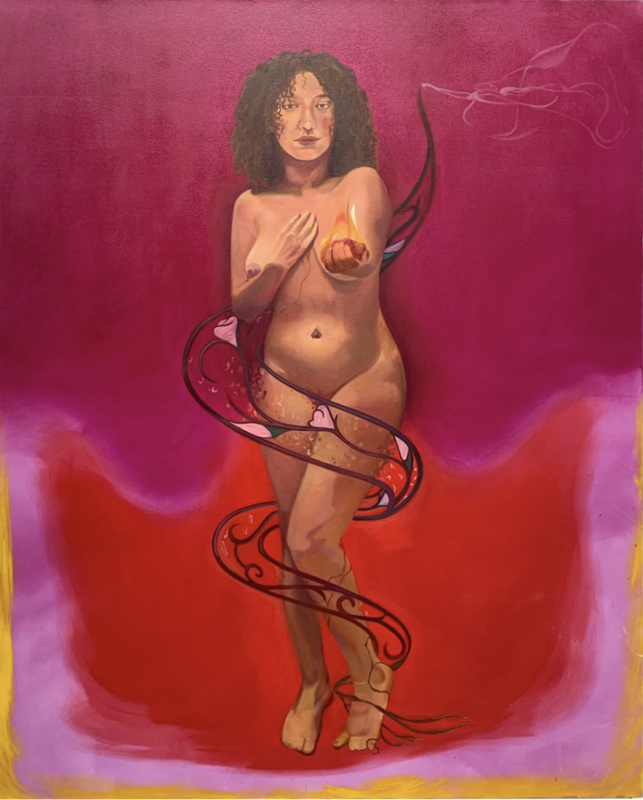
I think the connection between color and emotion shows up very clearly in my work. I like to paint big because I feel big emotions but also because it also makes me move my body. If I'm feeling something the first step is to do something physical. To move. It's either I’m moving around in a big space so that I can paint really wide. Or the complete opposite. If I'm feeling, calm, centered, and focused, I paint really small or apply things in different ways and that reflects a direct relationship with how I'm feeling physically or where the place of the emotion is sitting in my body. The movement varies too, sometimes this means I’m setting up a camera and recording myself dancing. And that'll maybe turn into something else.
BT: It is such a practice of movement. Especially when there's nothing else to do but move and place the emotion. It has to go somewhere.
NF: Right, and that even could just mean that I need to create. So I leave my house and I walk forty minutes to the studio or I take a bike ride to the studio. Then I can feel alive and that emotion exited and the energy is out.
BT: Haha, it reminds me of love. Relationships are a practice of course, it reminds me of a something more desire-driven versus taking the time and energy to get to know somebody. The process and practice of building with someone and how that can enhance or heighten emotions that otherwise might be really explosive at first but then fade out if you're not intentionally spending time together for a long period. It's the same with building color and achieving richness.
NF: Yes! And almost in the same sense, I do a lot of thinking, but also rely on the intuitive action of placing one color next to another so that they can relate or contrast. And I think that can also maybe have a relation to what you're saying too. Something can be really vibrant in one place whereas if it's in a different place, it can look dull. Placing things in the right spot and then also, relating it back to love/relationships, it’s a practice of knowing where you're the most vibrant, the most deep, and dull. You can learn so much of what makes you a different version of yourself. Mentally, but also in relationships. Placement has a lot to do with it, in terms of color.
And sometimes it's planned out and sometimes it's really just what comes to me.
BT: What does the bust series mean to you?
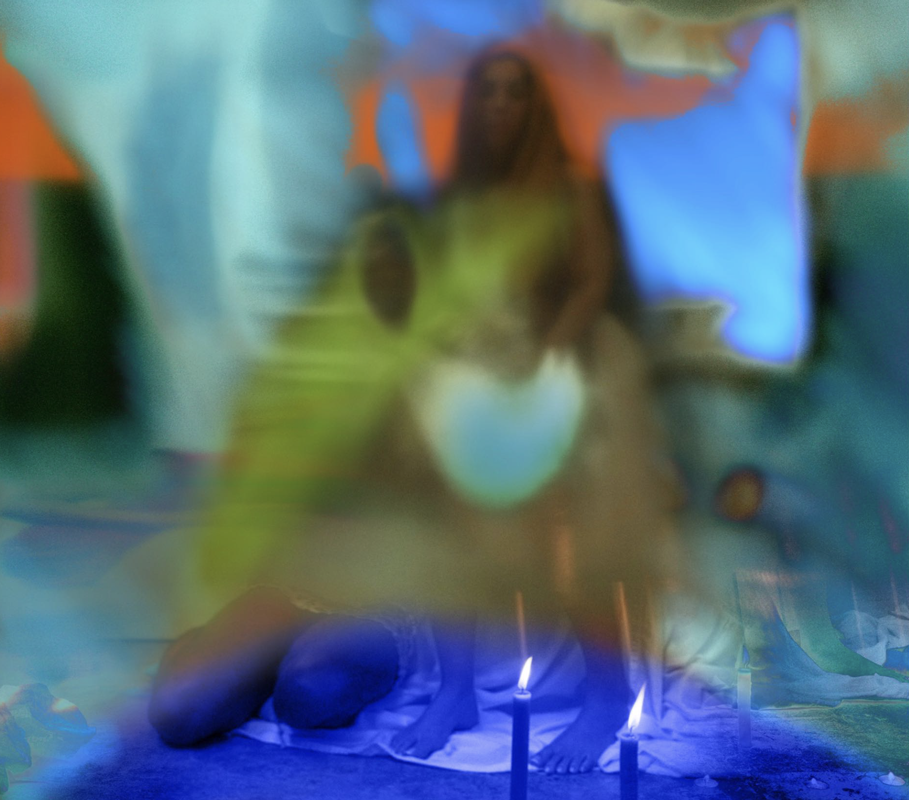
NF: It is so dear and important to me. Renacer, Mujer Volcanica, and volcanic alters have profound significance to me and for my practice. I feel like they’ve really brought on a shift in me and in how I create. Being able to physically and tangibly feel the process of receiving and then telling someone else’s story is a type of vulnerability that I am endlessly grateful for. The process of creating the busts is so tactile and intimate. I can’t stress enough that this process has allowed me to hit a milestone that will follow me in the expansion of my work for the rest of my life.
BT: What is your relationship to your dreams? Does it relate to your work at all?
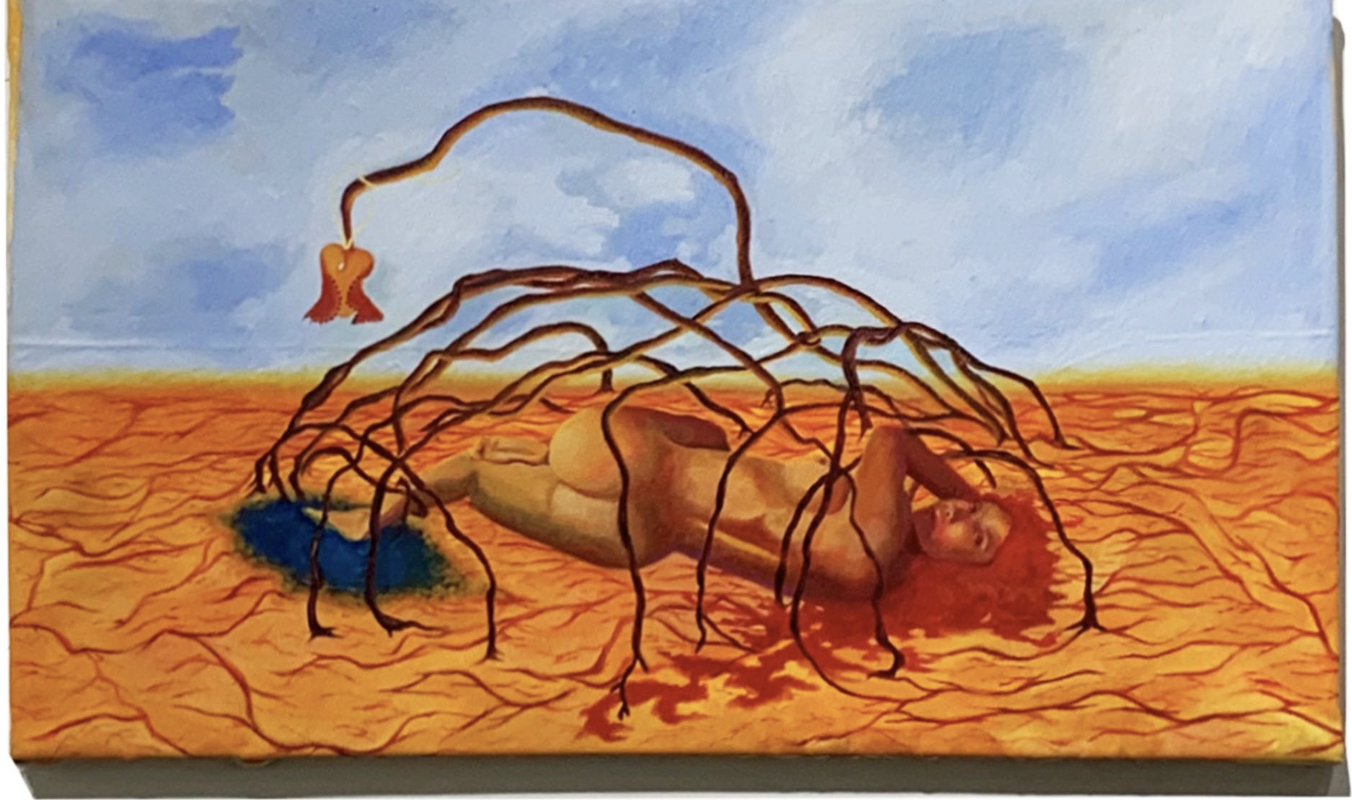
NF: I have a really close relationship with my dreams. They’re pretty vivid every night…which can be kind of intense. Haha it feels like I travel in a way. I'm actually really grateful for it. It's information. Often it’s an exchange where I can move between perspectives and lenses and feel them viscerally. It reassures me of how much I care about this current reality. Because I actually do think that dreams are not always that related to our current stresses or day to day life.
Sometimes I’m just traveling to a different dimension/reality. There can be overlap between my life and these realities, where I feel someone I know or past lives.
BT: Past lives show up for me in dreams as well. It’s also strange to feel that a part of your body isn’t yours in dreams, meaning your current reality, when experiencing different perspectives.
NF: Exactly, it is strange. It’s humbling too, when I feel I’m traveling to another place and get to arrive back safely in the morning. I am grateful to experience all of these different realities. I guess this is why I like to sleep so much haha. I also need to be really slow in the morning, you know? I have a lot of morning people around me, so they’re always making fun of me. And I’m like, I was just traveling somewhere else! Give me time. I’m capable of waking up early but I like to take my time to transition back into this waking life. Especially if I’ve gone through an emotional loop in a dream. I sponge a lot from it all. It makes sense then that my intuition is also very strong, I believe it speaks to us constantly, our higher self nudging.
BT: I think it can be difficult to decipher between anxiety and intuition as well, particularly for people that feel intensely, are sensitive, or get overstimulated quickly.
NF: Yes, every once in a while, I ask myself, is that my intuition or is anxiety? Am I just having an anxious thought? It can make me feel a bit indecisive. But I also think that it makes me empathetic. It allows my life to connect to my work and flow directly. If I'm having an off day and I'm really doubting myself, the work will be shaky for sure. It probably won't be the best. But for the most part, and especially in those moments of obstruction or impulse, it does feel as if something is guiding me. Especially if I’m working with natural materials, pigments, or even just oil painting. That always makes me feel connected.

BT: Do you have methods that help you get back to that self-trust, to avoid doubt?
NF: Yes, when I’m spiraling I go straight into action. Like I mentioned before, a walk or bike ride, getting outside. I do have deep trust in the people around me as well, so if I need support, I know I can count on them–even when it comes to critique of my work or being honest with me. I’ll call them or see them in person, sometimes I’m really cloudy or a tornado. I have really special people who I know can bring me back to myself.
BT: That is crucial, it can feel counterintuitive to kind of step outside of yourself in those moments. Particularly if you don’t know where to go. It is good to rely on yourself in those moments or to have somebody else reflect for you or become a mirror for you.
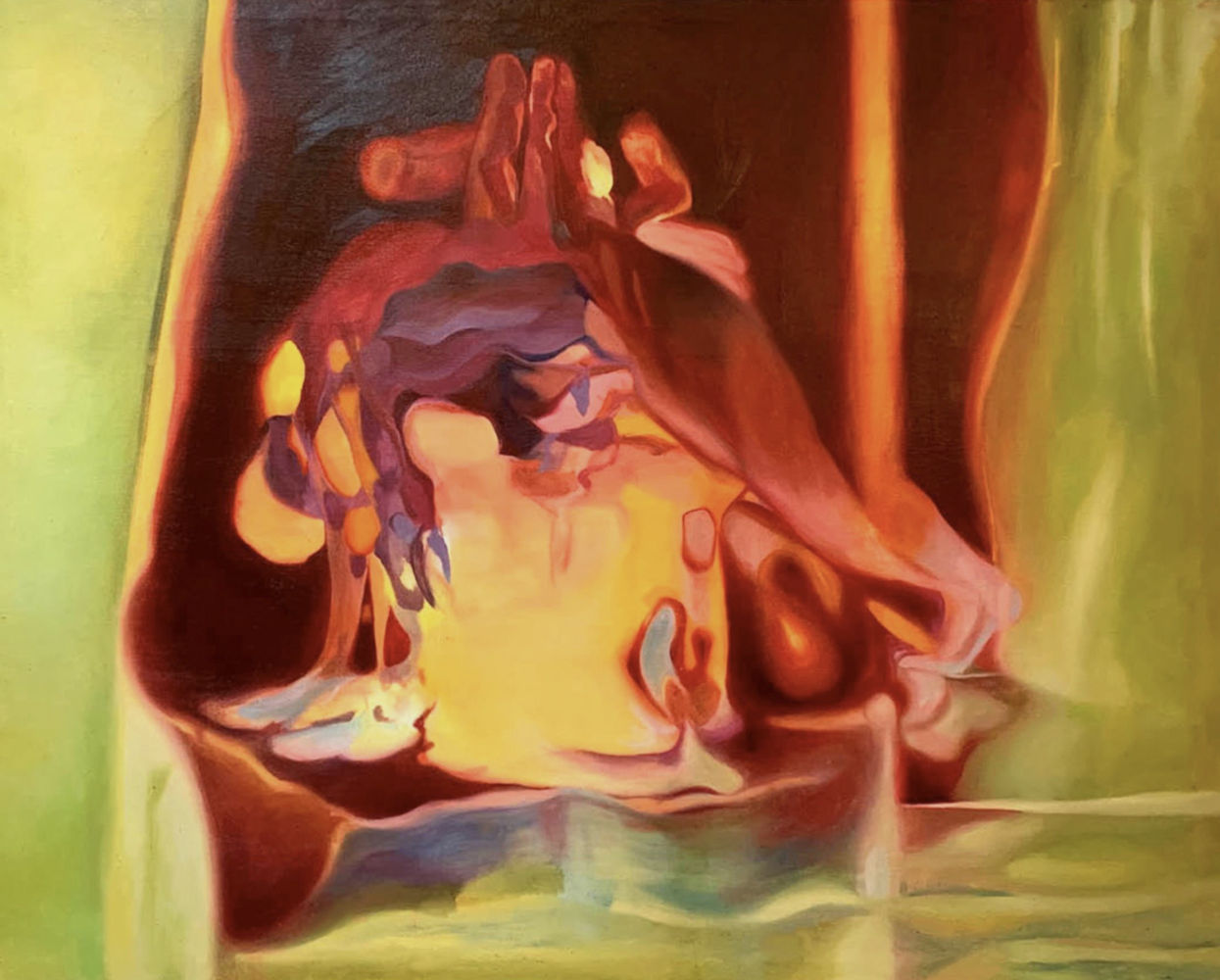
Vibrant, deep pigments are a core aspect of your work. What significance do specific colors have to you? For example, in Self Portrait there are vibrant reds and pinks versus the cooler blues and greens in works like A Warm Embrace, Cactus Amarrado, or Dormant Volcano.
NF: So much of my work is derived from what I see in the natural world. I often translate emotions, images that create a phenomena through lenses of varying color. When it comes to the deeper colors, I like to reach their depth through layers. Repetition is like ritual and both are core to my practice. If I overlay the same diluted pigment over itself repeatedly, I reach a level of depth that can be felt versus painting it once. So for me, color and texture can be some of the most important parts of my work. I have such a intuitive relationship with color. Once I started teaching color theory–some of the fellows at Recess were having trouble with it—So when I broke it down, it allowed me to recognize how much I knew about it, intuitively or otherwise.
If I add layers and layers of one color or the variations of that color, it'll reach such an intense depth. To get the darkness of what that looks like or the saturation of what I want that to look like, or else it'll look flat. I think that's kind of a comparison to life. You you can't get the depth of whatever you want to get without experience. Or, you can't do it without repeating it and practicing and doing it over and over and over. Or it's gonna fall flat even if you're technically getting what you think you wanna get. It's just like a cover. You know?
BT: What else informs your practice?
NF: I separate my practice into two sections for the most part. With one section, I’m really intentional and hyper-focused. This focus is a practice I picked up since I studied design, we would have these six months, sometimes year long research practices. We would get into a class, pick a subject, and research it intensely for the duration of the semester. We would make experiments, research, and then execute. We’d then go back to our work, erase it, come back, and repeat. It’s another part of the tool belt. This led me to apply this habit deeply into my practice. It’s a bit of this and letting go too. I also let my design background influence my freeform art practice, which gave it structure. It gave me an emotional safety structure as well. I think it helped my work evolve. So in this hyper-focused section, sometimes I pick a subject, read about it, or listen to audiobooks about it. Then I have conversations with people about it and experiment through drawing or painting. I’d end up with this huge body of work. This feeds into whatever I want to create next.
The other side of the split is abstract. I let go completely and allow myself to just take in what I've already learned or noticed internally and externally. Sometimes my favorite works come from this method. It takes a lot of time as well, but I can sense or know when I’m done. Then I have to just walk away from it.
BT: Would you say you’re more careful with the research method?
NF: Yes, I think so. Especially when I’m sitting and thinking. And there's times that I go into the studio wherever I'm making work at the time and I’ll just sit and stare at the work I’m already making for hours. Then I leave and that was my session for the day.
BT: So much patience!
NF: Yes haha or sometimes I’ll be frantically writing notes about the work or in general. Then it becomes a practice of understanding myself and the work. For example, my self-portrait, which is still technically unfinished because there’s a stained glass piece I’m working on.
For this portrait, it was an image that was clear in my mind. It wasintense research, in one sence, there was a lot involved and, yeah, you could definitely put it in that category because I was listening to so many things about stuff that I was dealing with. And I was sitting there and writing. I was also studying glass and metal, the way that things refract, and I'm studying light. So it's a slow process either way, through feeling or purely research-based. I take my time with it.
BT: When you're sitting with the work, especially with self portraits, it's almost like you’re on a date or meeting someone new. You're sitting there and getting to know them and gathering information. Getting comfortable with yourself.
NF: Exactly. Part of that research could be going in front of the painting every day.
BT: If it feels too new all the time I can imagine that's probably hard to work with, if it’s unfamiliar.
NF: I definitely combine intuition in both fast-paced or emotive methods and thoughtfu or slow. I think all my practice is run by intuition, but there's a little extra thought or care at times. A build versus throwing it on the canvas.
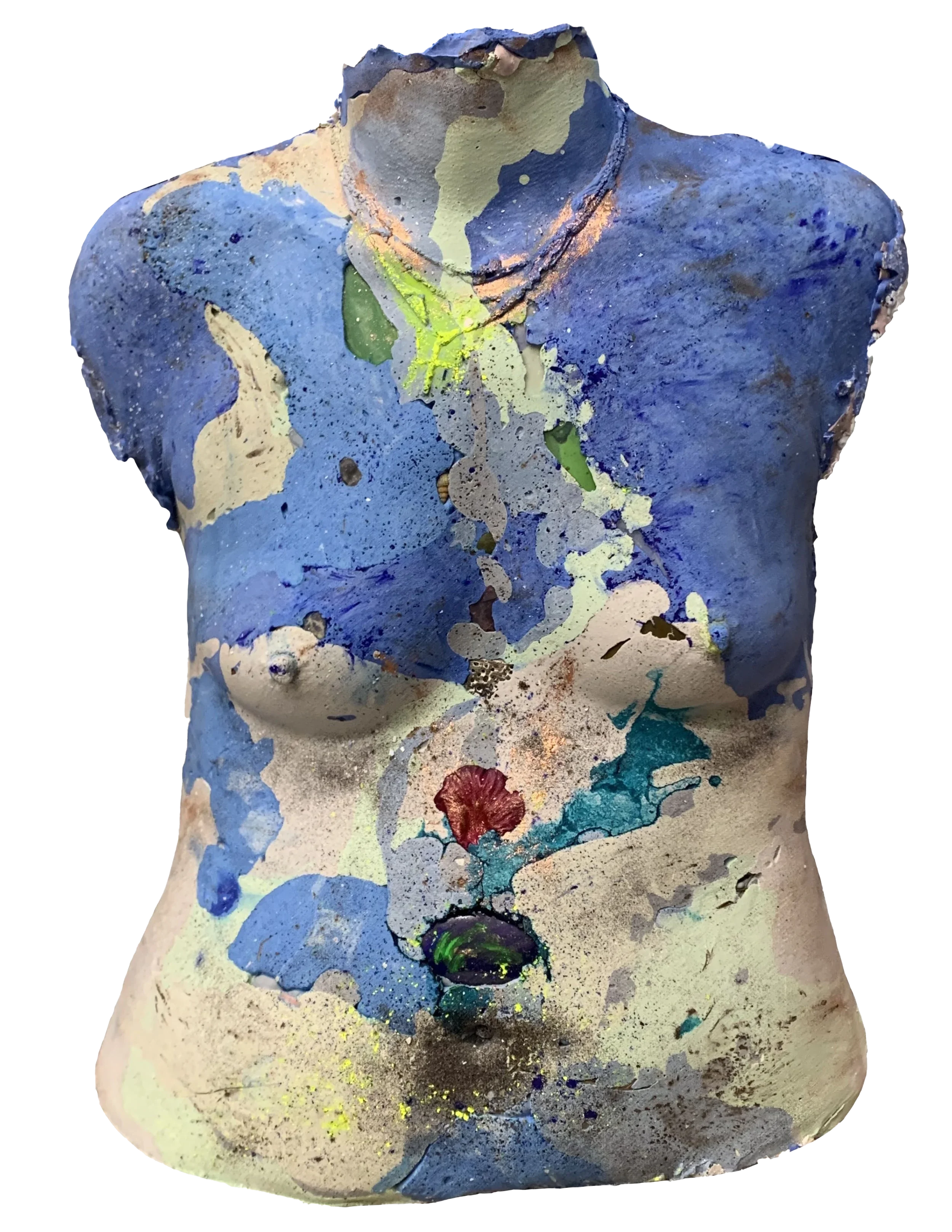
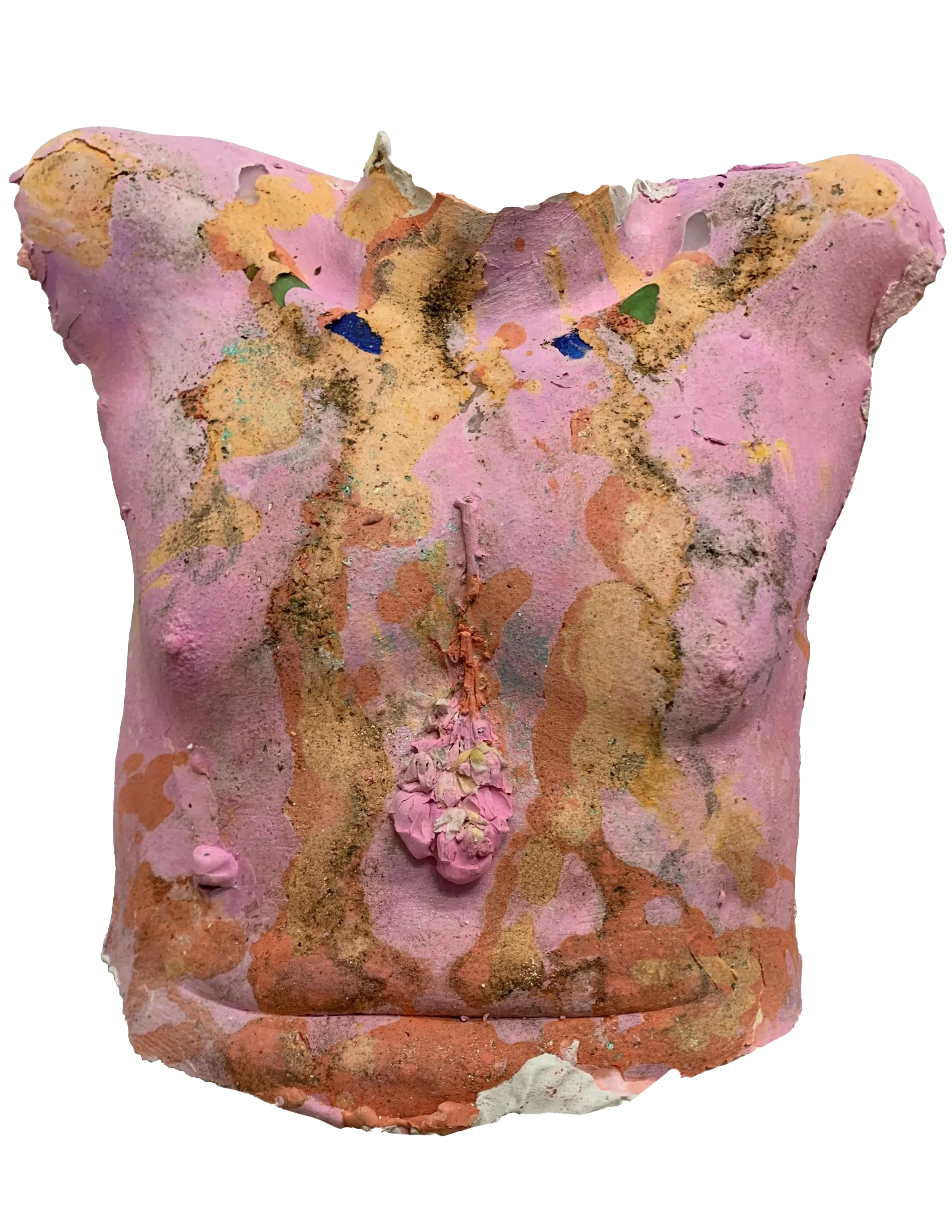
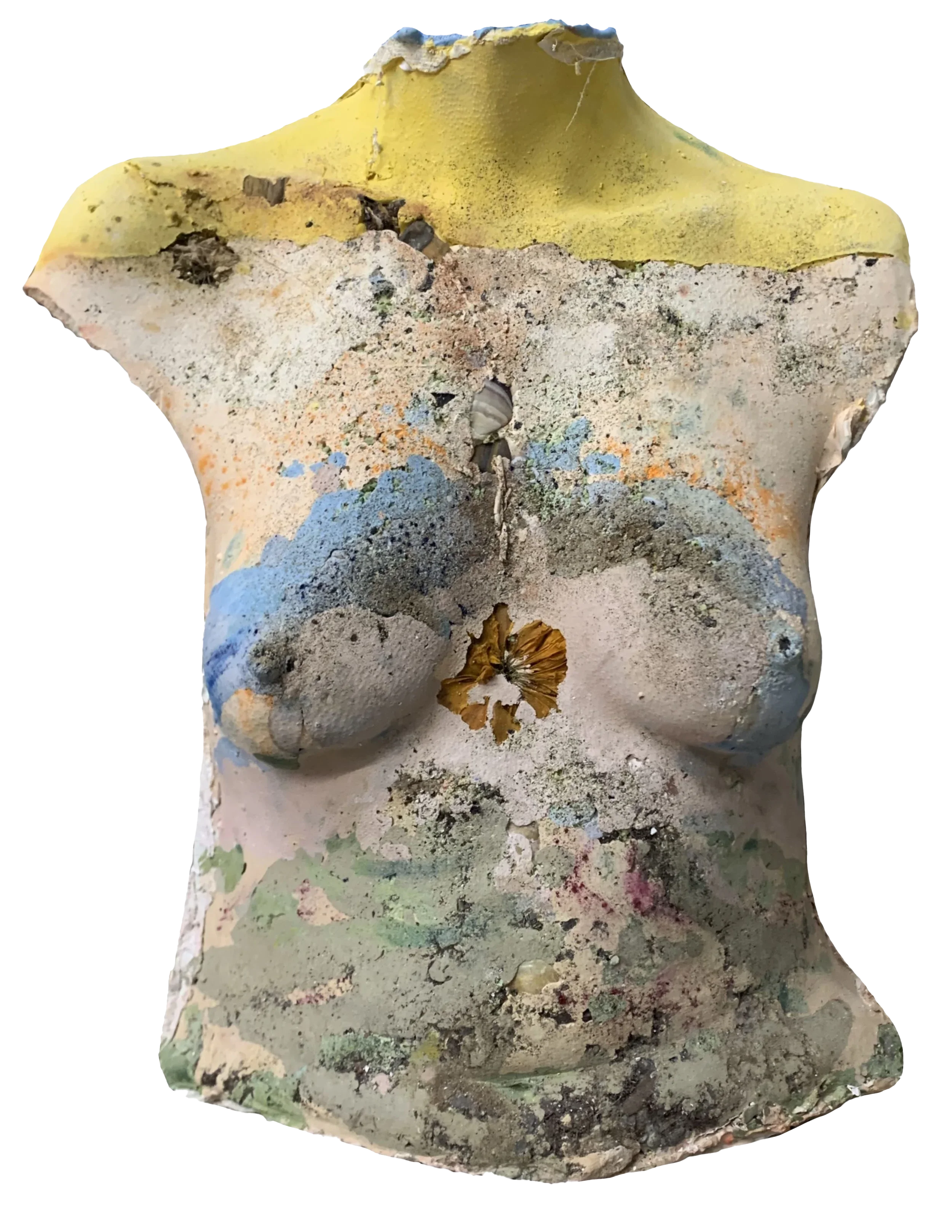
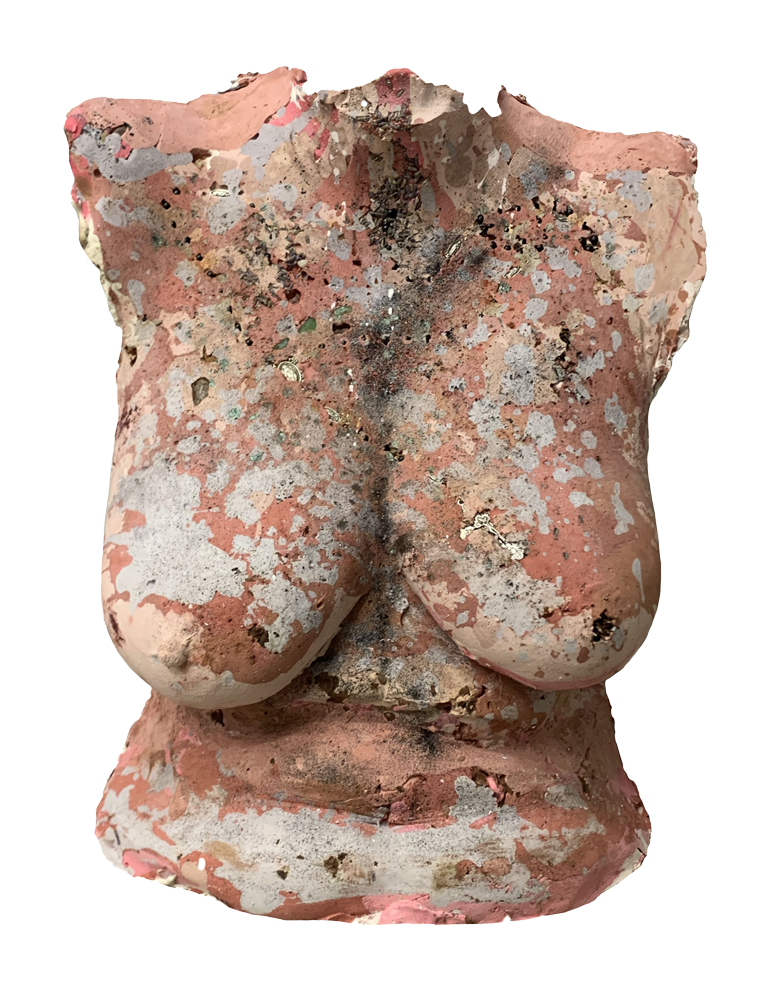
The concept of the series is reflective of life and death cycles or the processes of dying and re-birthing: the beginning, the end, and everything in between. These works emphasize placing process on a pedestal versus the outcome or finality. Everything becomes equalized or balanced and put under a microscope of gratitude. The process of meeting one on one with someone and asking them deep questions while I’m putting my hands all over their torso with goopy, cold, and messy material is very vulnerable! But it is such a tangible experience in that way–I call it tangible storytelling. And as hard as it might be to focus on the process or being present within that, I do believe that’s the best way to move through cycles, whether in explosions of life or fertilizing in the aftermath. The moments we inhabit in between really give us the meanings we need to create. The volcanic cycle is reflective of this concept, the eruption is tragic and devastating but it's important. The ground eventually becomes fertile and so beautiful.
BT: It’s difficult to think of placing discomfort on a pedestal or viewing it as being equal to the blossoming moments, but you can’t really have one without the other.
NF: Right, it’s working to rearrange your body not to drive with fear but curiosity instead. Like okay, this might suck but let me see what happens.
Natasha Fortson is a multidisciplinary artist and curator based in Brooklyn, with roots in Mexico and Los Angeles. Her practice merges traditional fine art techniques with a background in graphic design, holding a BFA from Pratt Institute and Elisava School of Design and Engineering. Committed to expanding her technical skills, she has participated in residencies such as Arquetopia Printmaking Residency in Puebla. As an independent curator, she has organized exhibitions and activations that foster international artistic and musical connections, most recently Raíces at Compére Collective. She also leads a workshop at Assembly, Recess, mentoring fellows on building sustainable careers as multidisciplinary artists. Drawing from her cultural heritage and environment, Fortson works across oil painting, sculpture, and printmaking, integrating found objects and sustainable materials. Her work explores themes of time, space, trauma, healing, memory, and growth, often challenging socio-political hierarchies through structures of reciprocal care and collaboration. Her process is deeply tactile and research-driven, incorporating sound, texture, and community engagement to create layered, abstract narratives. Through open-ended storytelling, Fortson invites viewers to find personal meaning in her work, fostering connections between self, space, and collective consciousness.